Online Rummy Game: A Beginner-Friendly Guide to Rules, Tables, and Smart Play
Online Rummy Game: A Beginner-Friendly Guide to Rules, Tables, and Smart Play
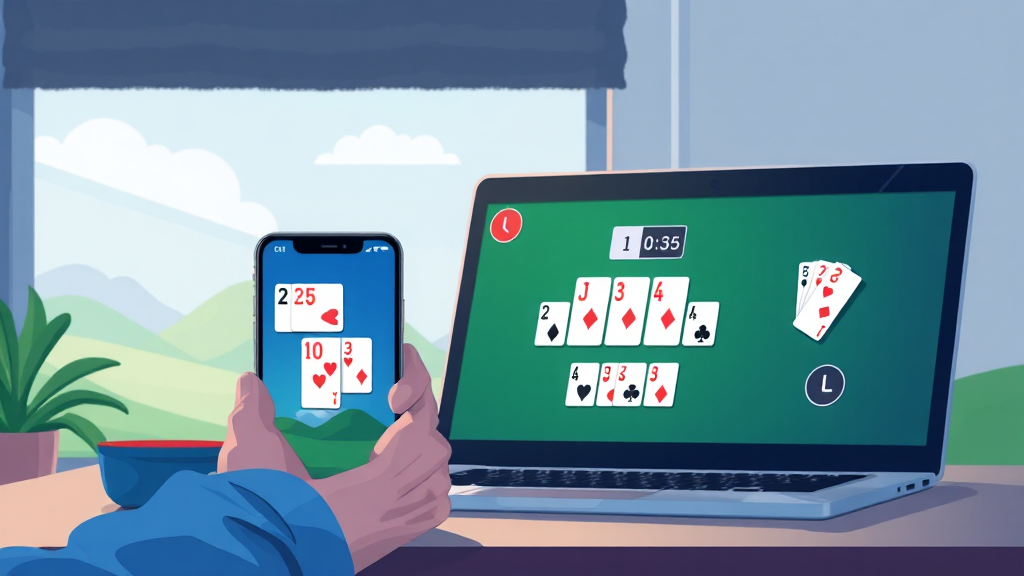
Rummy has been a favorite card game in homes, clubs, and friendly gatherings for generations. What used to require a physical deck, a flat table, and at least one willing opponent can now be enjoyed from a phone, tablet, or laptop. The Online Rummy Game has made this classic pastime more accessible than ever, allowing players to learn the rules, practice their skills, and compete with others at their own pace. Whether you are completely new to the game or you have played casually for years, understanding how the digital version works can help you enjoy it more confidently and responsibly.
This guide walks through the essentials of online rummy: how the game is structured, what rules carry over from the physical version, how to read a table, and how to build better habits over time. It also covers the practical side of choosing a platform, managing your time, and staying safe while playing. The goal is not to promise quick wins or guaranteed results, but to give you a clear, honest picture of what the online rummy experience actually involves.
What Makes Online Rummy Different from the Tabletop Version
At its core, rummy is a matching and sequencing game. Players draw and discard cards to form valid combinations, usually sets and runs, and the first person to arrange their hand correctly wins the round. The online version preserves that foundation, but the delivery changes a few important things.
First, the pace is faster. There is no shuffling, no dealing by hand, and no waiting for someone to sort their cards. The software handles all of that instantly. That means rounds can move quickly, and you may find yourself playing more hands in a short session than you would at a physical table.
Second, the rules are enforced automatically. If you try to make an invalid declaration, the system will usually stop you or flag the move. This is helpful for beginners because it reduces arguments and makes the learning curve smoother. At the same time, it means you cannot bend the rules casually the way a group of friends might at home.
Third, the social element changes. Instead of reading faces and body language, you rely on timing, card patterns, and the visible discard pile. Some platforms include chat or emoji features, but the experience is more about the cards than the conversation. For players who enjoy quiet focus, that can be a plus. For those who play mainly for the social side, it may feel different at first.
Core Rules Every New Player Should Learn First
Before you sit down at any table, it helps to understand the basic building blocks of the game. Most online rummy variants share a common set of rules, though small details can vary by platform and format.
Objective: Arrange all the cards in your hand into valid combinations before your opponents do. A valid combination is either a set or a run.
Set: Three or four cards of the same rank but different suits. For example, the 7 of hearts, 7 of clubs, and 7 of spades form a set.
Run: Three or more consecutive cards of the same suit. For example, the 4, 5, and 6 of diamonds form a run. Some variants allow a joker to substitute for a missing card.
Jokers: Printed jokers and wild jokers can often be used to complete sets and runs. Rules about how many jokers you can use and whether you can declare with a joker vary, so check the specific table rules before you play.
Draw and discard: On each turn, you pick up a card from either the closed deck or the open discard pile, then discard one card from your hand. This cycle continues until someone declares.
Declaration: When you believe your hand is complete, you declare and reveal your cards. If the combination is valid, you win. If it is not, you may receive a penalty depending on the platform’s rules.
Learning these basics thoroughly will make everything else easier. Many beginners rush into fast tables before they are comfortable with sets, runs, and jokers, and that usually leads to avoidable mistakes.
How to Read an Online Rummy Table
The layout of an online rummy table is designed to give you the information you need at a glance. While each platform arranges things slightly differently, most include the same core elements.
The closed deck is the pile of face-down cards you can draw from. The discard pile is where used cards go, and it is usually visible to everyone. Watching the discard pile is one of the most useful habits you can develop, because it tells you which cards other players are letting go and, by extension, which cards they may not need.
Your hand is displayed at the bottom or side of the screen, often sorted automatically. You can usually rearrange it manually to group potential sets and runs. Some platforms highlight possible combinations or suggest groupings, but you should not rely on those hints entirely. Thinking through your own hand is part of the skill.
Timers are another key feature. Most online tables give each player a limited amount of time to act. If you take too long, the system may automatically draw or discard for you. This keeps the game moving, but it also means you need to make decisions reasonably quickly. Practicing in casual or low-pressure rooms can help you get comfortable with the pace.
Finally, look for the rules panel or help section. It usually explains the specific variant being played, the number of jokers allowed, and the penalty structure. Reading it before your first hand can save you from confusion later.
Building Better Habits as You Play
Improvement in rummy comes from repetition, observation, and honest review. There is no shortcut that replaces experience, but a few habits can speed up your progress.
Keep your hand organized. Group obvious sets and runs early, then adjust as you draw new cards. A tidy hand makes it easier to spot opportunities and avoid discarding a card you actually need.
Watch what others discard. If a player discards a card you were hoping for, it may still be available in the closed deck, but the odds change. Tracking discards helps you make more informed decisions about which cards to keep and which to let go.
Do not hold onto too many unrelated cards. Beginners often keep high-value cards hoping to form a run later. Sometimes that works, but often it slows you down. Balance patience with flexibility.
Use jokers wisely. A joker can complete a combination, but it can also be wasted if you use it too early on a weak set. Think about whether the joker is better saved for a more valuable or more certain combination.
Review your losses. When a round ends, look at what went wrong. Did you misread a combination? Did you discard a card you needed? Did you declare too early? Honest review is one of the fastest ways to improve.
If you are exploring different apps and formats, a curated directory such as Prime Card Rummy can help you compare listings, ratings, and installation details in one place. Having a clear overview makes it easier to choose a platform that matches your comfort level and preferred style of play.
Choosing a Platform and Playing Responsibly
The platform you choose affects almost everything about your experience, from the interface to the rules to the pace of play. Before committing time to any app, take a few minutes to check a few practical points.
Look at the game variants offered. Some platforms focus on a single format, while others include multiple variations with different rules and joker settings. If you are new, starting with a simpler variant is usually wise.
Check the user reviews and ratings. They can reveal issues with performance, customer support, or clarity of rules that are not obvious from the app description alone. A well-maintained app with responsive support will make your experience smoother.
Understand the time commitment. Online rummy can be absorbing, and it is easy to lose track of time when rounds move quickly. Set a limit before you start and stick to it. Taking breaks between sessions helps you stay sharp and keeps the game enjoyable.
Play for fun first. Rummy is a game of skill and strategy, and the satisfaction comes from making good decisions, learning from mistakes, and improving over time. Treating it as a casual hobby rather than a pressure-filled competition will keep it enjoyable for the long run.
Finally, make sure you are comfortable with the platform’s terms, privacy practices, and age requirements. Responsible play means knowing what you are signing up for and choosing environments that feel safe and transparent.
Common Mistakes and How to Avoid Them
Even experienced players make mistakes, but beginners tend to repeat a few specific ones. Being aware of them can help you avoid unnecessary frustration.
One common mistake is declaring too early. It is tempting to declare as soon as your hand looks close to complete, but if the combination is invalid, you may face a penalty. Take a moment to double-check your sets and runs before you declare.
Another mistake is ignoring the discard pile. Players who focus only on their own hand miss valuable information. The discard pile tells a story about what others are collecting and what they are avoiding.
A third mistake is holding onto too many jokers or wild cards without using them effectively. Jokers are powerful, but they are only useful if they help you complete a valid combination at the right time.
Finally, many beginners play too fast in high-pressure rooms before they are ready. Starting in slower or more casual environments gives you room to think, learn, and build confidence before moving to faster tables.
Frequently Asked Questions About Online Rummy
Is online rummy the same as the card game I played at home?
The core rules are usually the same, but the online version enforces them automatically and moves at a faster pace. Sets, runs, draws, discards, and declarations work in much the same way, though specific variants and joker rules can differ by platform.
Do I need to download an app to play?
Not always. Some platforms offer browser-based play, while others require a mobile app. A curated directory can help you compare options and see which formats are available before you commit to installing anything.
How long does it take to learn the game?
The basic rules can be learned in a single sitting, but becoming comfortable with strategy, card reading, and decision-making takes longer. Most players improve steadily over weeks of regular, relaxed play.
Can I play rummy without spending money?
Many platforms offer free or practice modes that let you learn the rules and build skills without any financial commitment. These are a good starting point for beginners who want to understand the flow of the game first.
What is the most important skill in rummy?
Observation and flexibility are arguably the most important. Watching the discard pile, keeping your hand organized, and adapting your strategy as new cards arrive will help you more than memorizing any single trick.
How do I know if a platform is right for me?
Consider the game variants, interface, pace, reviews, and support options. If a platform feels confusing or uncomfortable, try another. The best choice is the one that lets you enjoy the game and learn at your own speed.